User-generated content: let your guests do your marketing
Guests who post a photo of your B&B on Instagram reach an average more potential guests than your own account, simply because they reach their own network. That network doesn't know you yet. That's exactly why UGC (user-generated content, images and text your guests make) is more valuable than any ad budget.
Why guest content beats professional images
A photo of a guest in your garden at sunset convinces differently than the same photo taken by a photographer you hired. The photographer delivers technically better images. The guest delivers proof.
Visitors on your website and social media aren't consumers of your marketing; they're seeking confirmation. They want to know if other people enjoyed it too. A guest photo with the caption "just a morning here" provides that confirmation, because nobody benefits from it looking nice.
That's the mechanism behind UGC. Not the quality of the image, but the independence of the source. Someone who doesn't know you but knows your guest believes that guest. Period.
For small accommodations this is particularly valuable. You don't have a campaign budget. You do have guests who take photos every week and share them free, if you handle it right. UGC is one of the cheapest building blocks of your whole social approach. How it fits in the bigger picture you'll read in the social media hub.
How to stimulate guest content
UGC doesn't come to you by accident. You create the conditions for guests to do it naturally.
Photo spots and moments
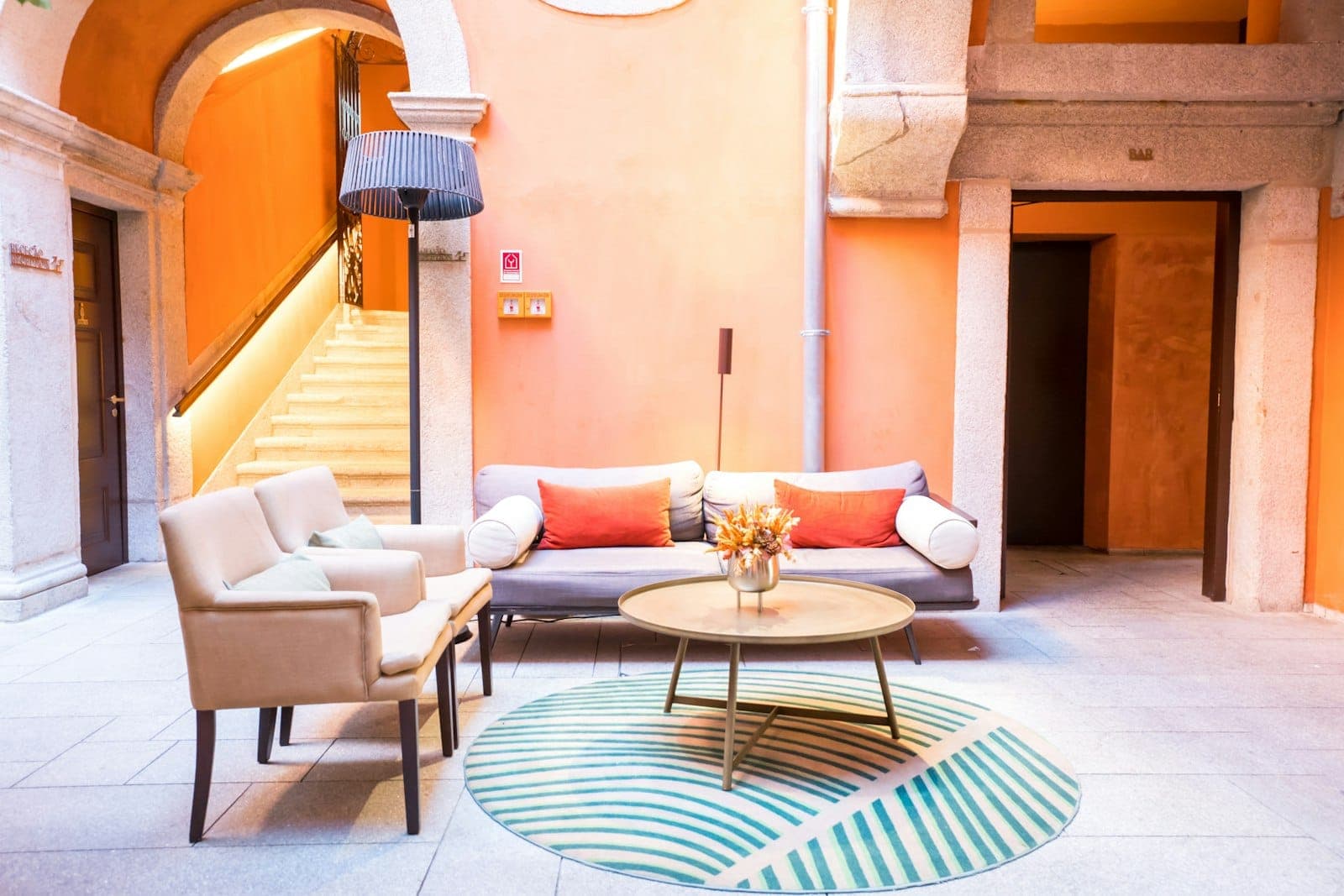
Make your accommodation photogenic in places guests visit anyway. That doesn't need to be grand. A corner of the breakfast room with nice light and a plant. A hammock on the terrace with a view. A rustic wooden sign by the entrance. People photograph what looks worth photographing, and you partly determine what that is.
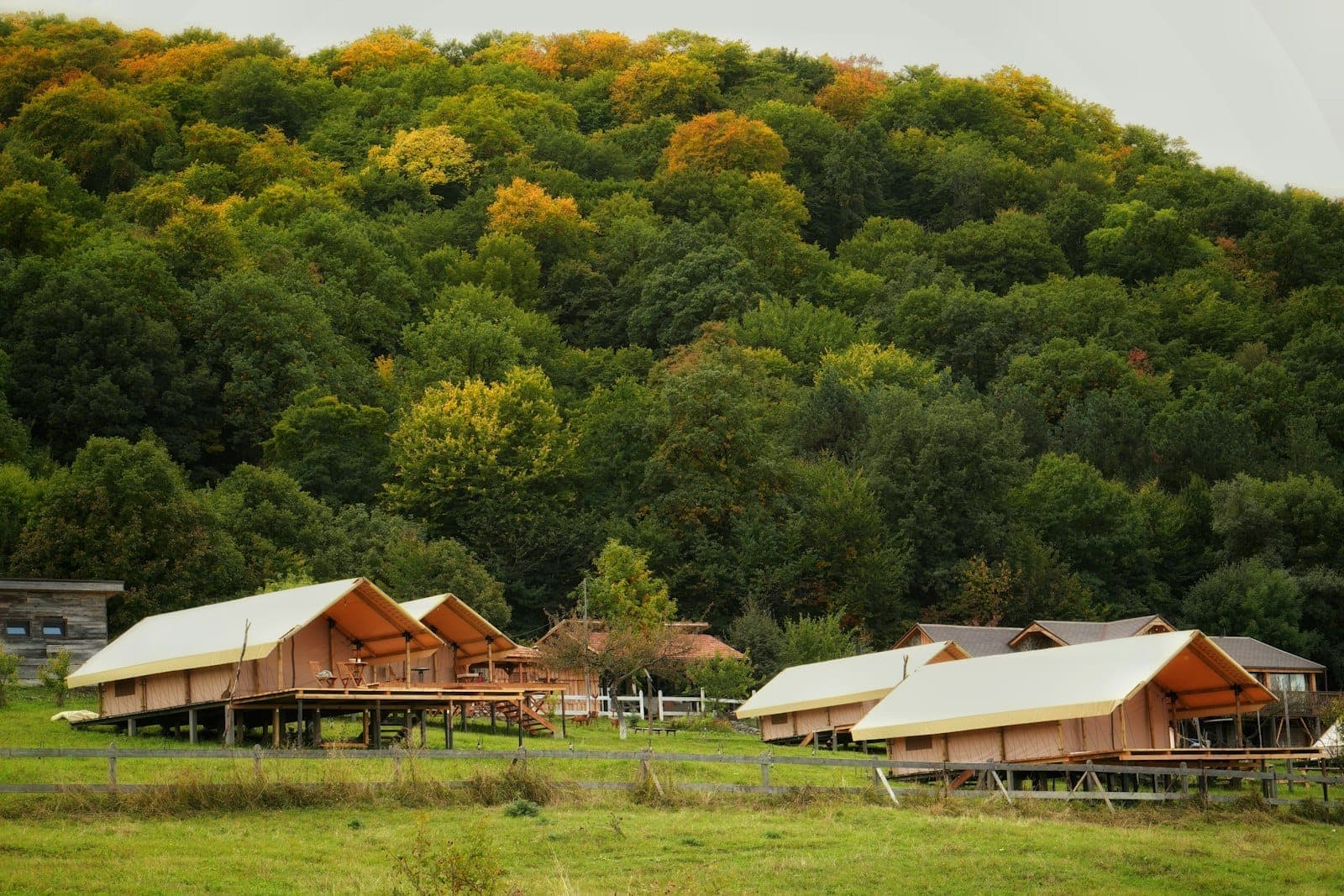
Glamping accommodations have a head start: guests already sleep in a setting that looks like an Instagram post. But even a city hotel can add a wall with an interesting pattern, a bar with mood lighting, or a door with color that gets tagged regularly.
Your own hashtag
Pick a short, recognizable hashtag for your accommodation and put it everywhere: on a card by the key, on the welcome page in the room, in your Instagram bio, on your wifi instructions. Something like #hotelthedunesornbtheship works well. The goal isn't that the hashtag goes viral, but that when you want to search what guests share, you can do it in one place.
The right request at the right time
The best time to ask a guest to tag you is at checkout or late on the first night, when the experience feels good. Not on arrival because they don't know anything yet. Not via an email three days later because the moment has passed.
A verbal request works better than something on a card: "If you find something pretty here, we'd love for you to share it. Tag us on Instagram with #yourhashtag, and we'll repost it with your name on it." That's not asking for ads. That's inviting them to share something they want to anyway.
Permission and rights
This is where many accommodations stumble, not from bad intent but from not knowing. A photo a guest posts on Instagram is the guest's. You can't just repost it, and especially not use it on your website, in a brochure, or a paid ad.
For Instagram Stories reposting there's a gray area: officially you need permission, but many people accept it if you mention them and they don't object. Ask anyway; it takes 10 seconds.
How to ask for permission
Send a short DM as soon as they tag you: "What a great photo, glad you shared it! Can we repost it with your name?" Nine in ten guests say yes, and it's free PR for them too.
For website or print use you need written permission. A DM conversation where the guest says yes counts. Save that conversation.
What you never do
Use photos without permission. Claim permission that wasn't given. Leave off credits when a guest explicitly gave you permission to reuse.
Make it easy for yourself
Save approved guest photos in a separate phone album or shared Google Drive folder. Label with name and date. This way you always have approved content ready if your own production slows down for a week.
UGC versus paid influencer content
At first glance a tag from a regular guest and a post from a paid travel blogger look the same: both are images someone else makes. But they work differently. A guest who tags you delivers social proof because nobody sees there's a deal behind it. A paid influencer delivers reach, but the viewer knows money or a free night was involved.
That difference isn't right or wrong, it's a choice. For a B&B with 8 rooms and 500 guests per year UGC often delivers more per invested euro, because it costs you 0 euros in compensation and 3 minutes per repost. A paid partnership makes sense when you want to reach a specific season or new audience organically.
Want to go that direction? It's smart to lay out the deal, compensation, and rights up front. How you do that without eating your margin you'll read in working with affiliate bloggers and influencers. Treat guest content and paid content as two separate categories in your calendar, so per channel you see what it delivers.
Where you use UGC
Guest content isn't just for your Instagram feed. The strongest places to use it:
| UGC source | How you get it | Where you use it |
|---|---|---|
| Instagram photo with tag | Guests tag your profile | Stories, feed repost, website gallery |
| Instagram photo with hashtag | Guests use your hashtag | Stories, highlights, site gallery |
| Google review with photo | Guest adds photo to review | Google Business Profile (auto), website quote |
| TikTok video | Guest tags your location or account | TikTok repost, Story share |
| WhatsApp or email photo | Guest sends you photo after stay | Website, mailing list, offline print |
| Verbal compliment | Guest tells you at checkout | Ask if they'll post it online too |
Instagram Stories and Highlights
Stories are the most low-barrier channel for UGC. You repost the photo with thanks, the guest sees himself come back and often shares your Story to his own followers. That's free visibility in a network that didn't know you.
Make a permanent Highlights map on your profile, like "Guests" or with your accommodation name. Save the best UGC-Stories there. New visitors to your profile immediately see what real guests thought of you.
Your own website
A gallery or carousel with guest photos on your homepage or room pages works better than stock photos. It shows how real people experience your space, not how a photographer staged it. Make sure you mention credits and that the photos are current.
Google Business Profile
Guests who leave a review on Google sometimes add photos. Those show up automatically on your Business Profile. Actively encourage reviews, because each photo that comes with increases your profile visually. How you do that is in gathering reviews on Google.
Common mistakes
Only waiting for what comes naturally
UGC doesn't come to you by itself if you do nothing. An accommodation with no hashtag, no photo spots, and no request gets occasional tags. An accommodation that actively stimulates it gets weekly content.
Ignoring tags
If a guest tags you and you don't respond, you miss a repost chance and a chance to show the guest you saw him. Check your notifications at least once daily and respond to tags. Takes 3 minutes.
Mixing UGC with paid imagery without distinction
Guest photos are valuable precisely because they're authentic. The moment you edit, filter, or crop them until they look like your ad photos, you lose that edge. Use them as purely as possible.
Forgetting to ask for permission
See the section above. Once a guest complains about unauthorized use of his photo, it costs you more reputational damage than it brought you.
UGC doesn't replace your own content
Guest content is a supplement, not a substitute. If your profile is empty or your own photos are poor quality, UGC only helps you so much. Get your basics in order. How you do that you'll read in the Instagram strategy for small hotels.
What you can do now
You probably already have guest content sitting unused. Tags you never reposted. Reviews with photos you didn't quote. An unknown hashtag nobody used because you never mentioned it.
Start there. Go through your Instagram notifications for tags over the past three months. Send the five most appealing guests a DM asking to repost. Make a Highlights map.
Then put your hashtag on your wifi card and your room info sheet. Add a line at checkout. Those are the four small steps that structurally deliver guest content, no budget needed.
Want to know how you fit UGC into a broader social approach, including planning and rhythm: a content calendar you stick to gives you the structure, and the social media strategy for your accommodation shows how all channels work together. And if you want to actively engage guests without sounding pushy, read activating guests on social: do's and don'ts.
What it brings you as direct bookings go up and OTA commission drops, you calculate in the savings calculator. Want to outsource this or build a strategy around it, that's marketing for hotels next.
Frequently asked questions
What is user-generated content exactly?
How do I ask guests if I can reuse their photo?
Does my accommodation have enough guests for its own hashtag?
Can I just use guest photos on my website?
Does UGC work if I have few followers yet?
How do I combine UGC with my regular content calendar?
What's the difference between UGC and a paid influencer post?
A concrete tip in your inbox each month
Practical marketing and automation tips for small-scale accommodations. No sales talk, unsubscribe anytime.
Your email address is only used for these emails and never shared. You can unsubscribe from any email. See the privacy policy.