WordPress, custom, or platform: which do you choose for your hotel site?

Three of four hotels who contact about their website are running a system they either pay too much for or that gives too little control. That decision happened years ago: WordPress, custom, or ready-made.
The problem: three routes, three very different outcomes
You want a professional hotel site. Someone says "use WordPress", another recommends a custom developer, and you see ads for platforms claiming you go live in a day. All three sound plausible. None always fit.
The choice determines what you pay year one, but also what you're stuck with in year three and year five. And whether you can wire up a booking engine later, or need a developer for that. If that choice is part of your bigger picture of direct bookings, check the website conversion hub where this article sits. Also read what a booking engine is and does if it's still new, because it's a central part of this compare.
Below the three routes sit side by side on what matters most for small accommodation.
The three routes compared
1. WordPress
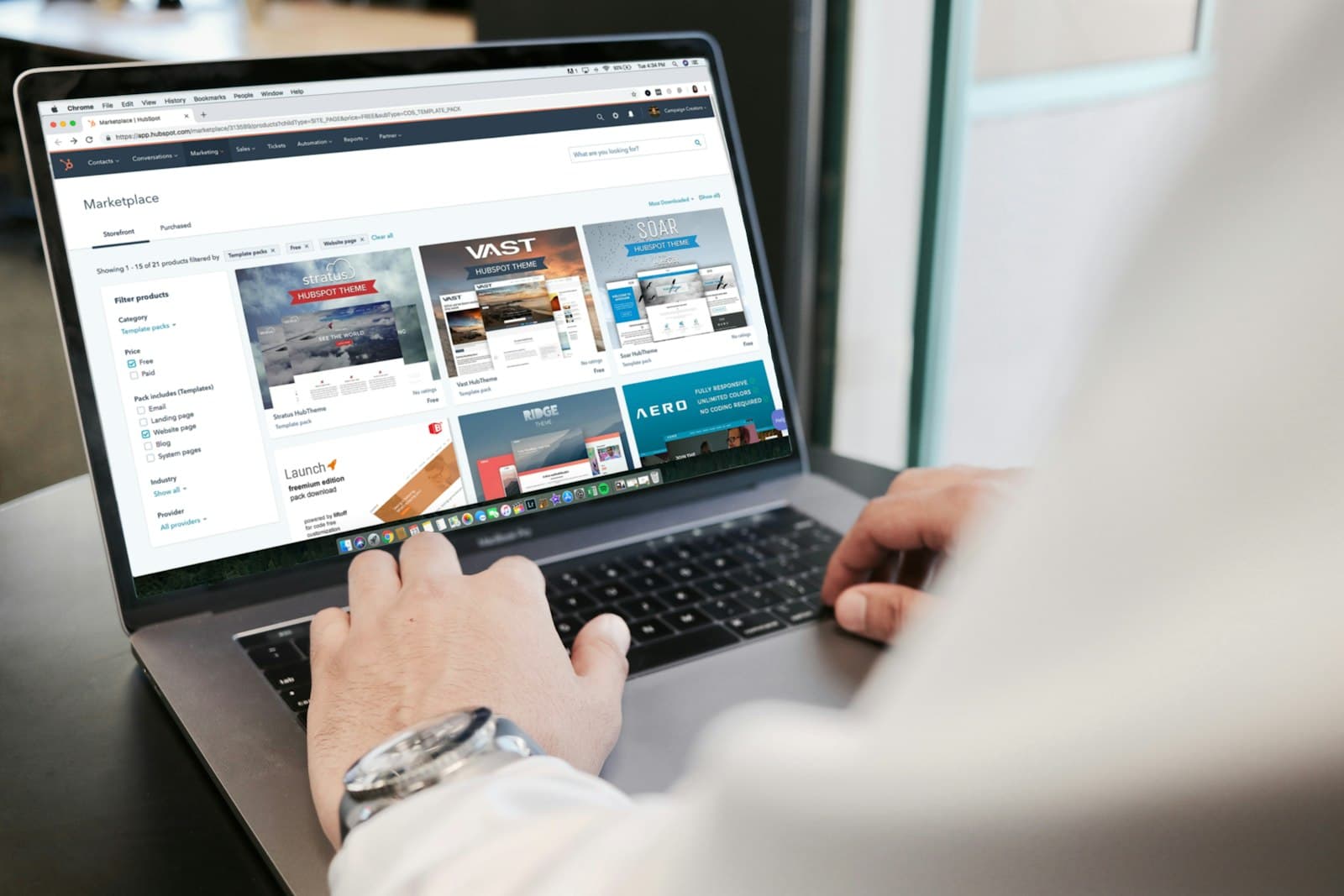
WordPress is open-source software you install on a hosting package. You pick a theme, install plugins, build your site. For hotel sites you usually use a paid theme built for accommodations, plus a plugin for your booking engine.
Build costs are one-time if you hire: an experienced builder charges 1,000 to 3,000 euros for a simple hotel site, including theme and booking engine setup. Hosting runs 5 to 20 euros monthly depending on package. After that costs stay low if someone occasionally does updates.
Big advantage: you own your site completely. You can switch hosts, change themes, try a different booking engine, all without starting over.
2. Custom code
Custom means a bureau or developer builds your site from scratch, just for you. No generic theme, no shared codebase. You pay for made-to-order.
Minimum is around 5,000 euros, and most full hotel sites come in at 8,000 to 20,000 euros. On top come upkeep contracts because every tweak needs the developer who knows the code. That makes you dependent.
Custom makes sense if you need features no standard system offers: think complex tiered pricing with custom logic, or a booking system deeply integrated with multiple locations. For a B&B, hostel, or glamping it rarely pencils out.
3. Ready-made platform
Platforms like Squarespace, Wix Hotels, Lodgify, or HotelTemplate are turnkey. You make an account, pick a template, drop in your rooms and go live. No hosting, no updates, no developer.
Monthly costs vary free to 80 euros, but read the fine print. Some platforms take commission per direct booking, which voids the point of your own site. Others bundle their own booking engine that only works on their platform.
The catch is ownership. Your domain sometimes belongs to the platform, content doesn't always export, and you're dependent on their pricing and policies.
Criteria laid out
| Criteria | WordPress | Custom | Platform |
|---|---|---|---|
| One-time cost (outsourced) | 1,000 to 3,000 euros | 5,000 to 20,000+ euros | None or low |
| Monthly cost | 5 to 20 euros (hosting) | 50 to 200+ euros (upkeep) | 20 to 80 euros |
| Upkeep | You or hired help | Always the developer | Platform handles it |
| Speed and performance | Good with good setup | Good with good work | Varies widely per platform |
| Booking engine hookup | Excellent | Depends on builder | Built-in or limited |
| Flexibility | High | Maximum | Low to fair |
| Ownership | Complete | Complete | Limited to none |
| SEO-friendly | Good | Good | Fair to good |
| Barrier to entry | Fair | High | Low |
What it costs concretely: calculation per route
Say: you run a B&B with 5 rooms. You want a professional site with booking engine, connection to Booking.com via channel manager, and good mobile speed.
Route 1: WordPress
- Build costs one-time (bureau or freelancer): 2,000 euros no VAT
- Hosting per year: 120 euros
- Theme (one-time): 60 euros
- Booking engine (Beds24 or similar): 20 euros per month
- Total year 1: around 2,420 euros
- Total year 2 and beyond: around 360 euros yearly
Route 2: Custom
- Build costs: 8,000 euros no VAT (low for custom)
- Annual upkeep contract: 1,200 euros
- Booking engine or built-in: 0 to 500 euros one-time
- Total year 1: around 9,200 euros
- Total year 2 and beyond: around 1,200 euros yearly
Route 3: Platform (Lodgify as example)
- Monthly subscription with booking engine: 50 euros
- Domain name: 15 euros yearly
- Total year 1: around 615 euros
- Total year 2 and beyond: around 615 euros yearly
But: if the platform charges 2 percent commission on direct bookings, and you do 10,000 euros direct annually, that's 200 euros commission on top. Over three years that's 600 euros extra, pushing WordPress into cheaper territory eventually.
Calculate looking ahead, not just year 1
Most owners compare startup cost. Put year 3 next to year 1. Custom and platforms with commission get dearer while WordPress stays cheap.
Recommendation per accommodation type
| Type | Recommended route | Why |
|---|---|---|
| B&B, 2 to 4 rooms, tight budget | Platform (no commission) | Fast to launch, low cost, minimal tech |
| B&B or hotel, 4 to 15 rooms, growth plans | WordPress | Best cost/SEO/ownership balance |
| Glamping, multiple locations | WordPress | Flexible, works well with channel manager |
| Hostel, complex availability | WordPress or custom | Depends if standard systems work |
| Boutique hotel, special system needs | Custom | Only if standard systems demonstrably fall short |
Common mistakes
- Platform for speed, then realizing you're not the domain owner. Always check who owns the domain before dollar one in.
- Choosing custom because it sounds "more professional". Professional is how the site looks, loads, and converts. Not the building method. WordPress converts just fine.
- Ignoring that sites need upkeep. A WordPress site without updates is a security risk within two years. Factor this maintenance into your plan or hire help.
- Treating booking engine as an afterthought. The booking engine is the point of your site, not a feature you wire up later. Verify your chosen platform/CMS works well with the engine you want. Read setting up your own booking system if you want the technical side.
- Page speed left out. A slow site loses visitors across all three routes. This matters most but is easiest to fix on WordPress.
Switching from platform to WordPress: is it possible
Many owners start on a ready-made platform and later hit limits: rising commission, weak SEO, content that won't export. The switch to WordPress is doable but watch the steps.
Three things check upfront. 1) Are you the domain owner? If not, you need to pry it loose or request transfer. 2) Can you export your text and photos, or is everything stuck? Budget another 4 to 8 hours if it's manual re-entry. 3) Which booking engine comes with you? Not all platform engines run standalone WordPress, so often you're swapping it out.
The cost of that move usually runs 1,500 to 3,000 euros, same as new WordPress build. You earn it back through lower monthly fees and no more commission on direct bookings.
What you can do now
Start with: do you want full control of your site, or minimal tech work? The first points to WordPress. The second can work on a platform if you watch commission terms and know you own your domain.
Then read the essentials of a good hotel website to see what any route needs. Want to see what more direct bookings bring you? Calculate in the savings calculator. And if you'd rather someone work it out and build for you, that's website building.
Frequently asked questions
What's the cheapest way to build a hotel site?
Can I connect a booking engine to WordPress?
Do I lose my site if I stop using a platform?
Is custom code faster than WordPress?
What does WordPress cost per year including hosting?
What fits a glamping or B&B with three rooms?
How long does switching from platform to WordPress take?
A concrete tip in your inbox each month
Practical marketing and automation tips for small-scale accommodations. No sales talk, unsubscribe anytime.
Your email address is only used for these emails and never shared. You can unsubscribe from any email. See the privacy policy.