More revenue per guest: cross-selling and ancillary revenue for accommodations
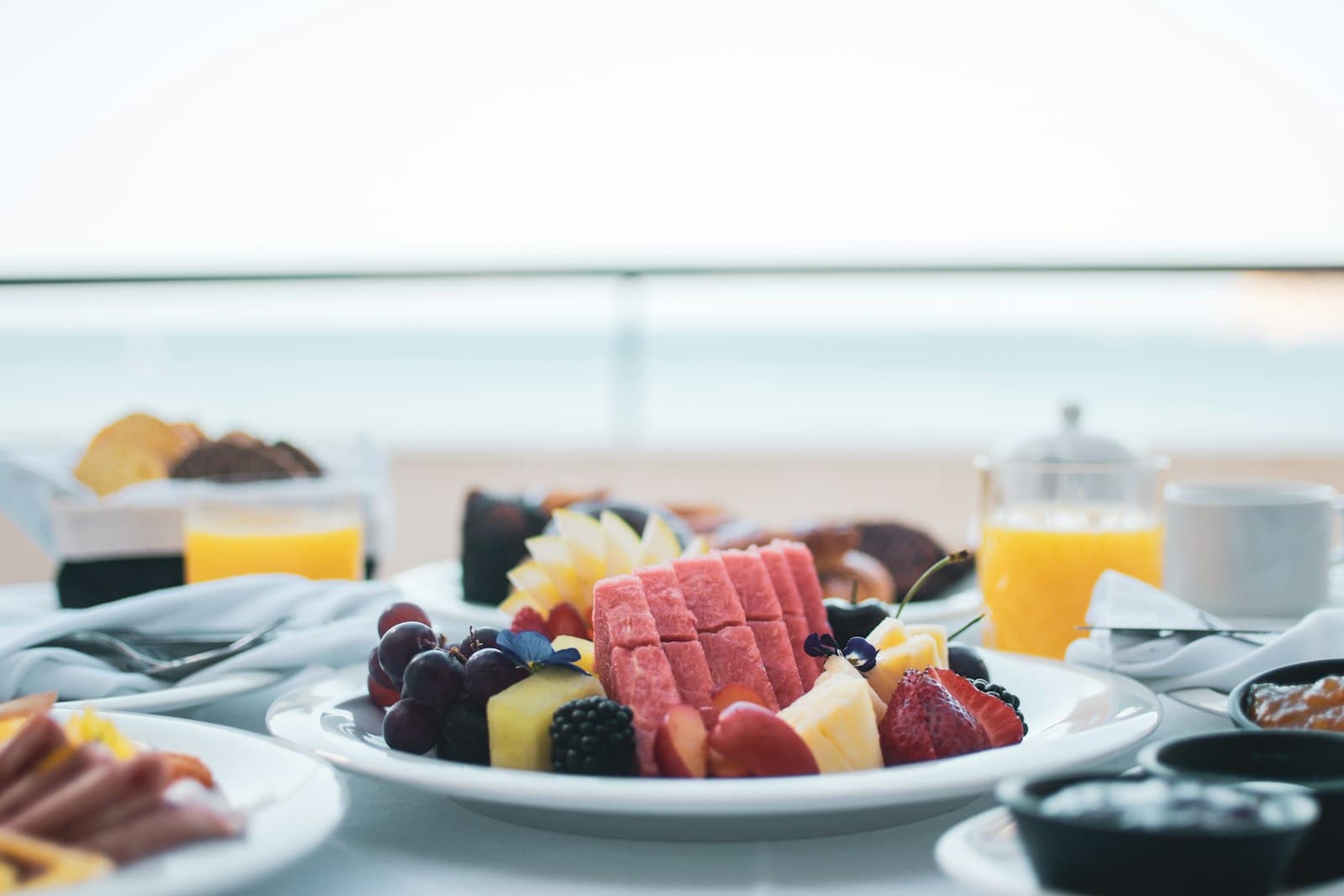
The room is not the only thing you can sell to a guest. Bike rental, a breakfast package, or a bottle of regional wine often produce higher margins than the overnight stay itself, and you do not have to pay commission on it.
The problem
Say you have 6 rooms and do 70 percent of your bookings via Booking.com. You work hard on your nightly rate, your occupancy, and your reviews, but the revenue per guest stays exactly as high as the room price. Not a euro more.
That is a shame, because the guest is already here. He has booked, he is coming, he is in the mood to make his stay nice. At that moment you can sell something extra without having to win a new guest. That is called ancillary revenue: extra revenue beyond the room price. Everything you earn on top of the overnight stay itself.
Most small accommodations leave this on the table. The focus is entirely on occupancy rate and average nightly price, while there is a second dial to turn. And that second dial is cheaper, because you pay no Booking commission on it and the costs per sale are low. An extra bike rental or package costs you no new ads, no lower price to win the booking, no 18 percent to the platform. It is revenue that mostly stays with you.
Think about how you treat your nightly price. You watch the competition, the season, your occupancy, and you tweak constantly. On revenue per guest, you rarely do that. You leave the same amount on the table with every guest, year after year. That is a missed opportunity, because that is exactly where the margin is highest and competition is lowest.
Two terms that get confused:
- Upselling is selling a more expensive version of the same thing. A room upgrade, a suite instead of a standard room. More about this in upselling room upgrades and breakfast.
- Cross-selling is selling an additional product alongside the room. Something that stands apart from the overnight stay: bike rental, a dinner package, late checkout. That is what this article is about.
Calculation example
The nice thing about cross-selling is that the margin is high. A bottle of wine you buy for 6 euros and sell for 18 euros, a bike rental where you barely have costs on. Below an example for an accommodation with 60 bookings a month.
| Extra service | Sale price | Margin | Sold per month | Profit per month |
|---|---|---|---|---|
| Bike rental (per day) | 15 euros | 80% (12 euros) | 18 | 216 euros |
| Breakfast package upgrade | 9 euros | 70% (6.30 euros) | 24 | 151 euros |
| Bottle of regional wine in the room | 18 euros | 65% (11.70 euros) | 12 | 140 euros |
| Late checkout | 12 euros | 95% (11.40 euros) | 15 | 171 euros |
| Total | 69 | 678 euros |
That is 678 euros extra profit per month, or just over 8,000 euros per year, without a single additional booking and without OTA commission. On average that is about 11 euros extra revenue per booking.
Stack that against your Booking commission. Say you pay 18 percent on an average booking value of 240 euros, then a Booking booking costs you about 43 euros. The 11 euros extra revenue per guest from cross-selling offsets a good chunk of that, and comes without you changing your room price or occupancy. It is the same guest, the same night, you just get more out of it.
Do not calculate with these numbers, calculate with your own. The numbers above are examples, not your figures. But the pattern holds: a couple of well-chosen services at high margin tick hard over a year. How much you are currently paying in commission and what direct bookings earn you, calculate through in the savings calculator.
Start with your highest margin
Look first at what you already have and what costs almost nothing to deliver: late checkout, a digital city guide, a welcome drink as a paid upgrade. That is where the highest margin is and the least hassle. Products with purchasing and inventory come later.
Action plan
- Make a list of 5 to 8 possible extras. Think about what fits your guest and your region. Bike rental for the cycling weekender, a romantic package for the weekend couple, local products that represent the region. Not everything has to stay, you measure what works.
- Determine price and margin per service. Deduct your purchasing and your time. Keep only the services with enough margin to be worth it. Under 50 percent margin it is usually not worth the effort for a small accommodation.
- Choose the moments you offer it. The three strongest moments: the confirmation page right after the booking, the pre-arrival email a few days before arrival, and the check-in moment. What belongs in your pre-arrival email, read in what must be in your pre-arrival email.
- Set it up concretely in your process. Add a checkbox to your booking module, a line in your standard pre-arrival email, a card in the room or at reception. Keep it simple: one service, one price, one way to say yes.
- Measure after a month what sells. Which service runs, which does not. Toss the silent ones, put the winners more prominently. This is ongoing work, not a one-time action.
As the volume grows and manual tracking gets tedious, that is when looking at software that automates this makes sense. What such software does and does not solve for you is in the pillar upsell software for your hotel. Do not start with the software. Start with the services and the measurement.
Common mistakes
- Offering too many choices at once. Ten packages in an email works against you. The guest gets choice paralysis. Offer two or three, the most relevant for that guest.
- Hiding cross-selling. A checkbox deep in the booking process that nobody sees produces nothing. It must be visible at the moment the guest is in buying mode, right after the booking and in the pre-arrival email.
- Offering it as a sale instead of as a service. "Would you also like to rent a bike" feels like pushing. "Many guests explore the area with a bike, want to reserve two for your stay" feels like thinking along. Same offer, different outcome.
- Trying everything via the OTA. Via Booking.com you often miss the email address and the contact moment before arrival. Cross-selling works strongest with direct bookings, where you approach the guest yourself. Another reason to build your direct channel.
- Not measuring. Without numbers you do not know which service pays off. Track at minimum how much you sell per service per month, otherwise you keep guessing.
- Offering services that do not fit your guest. A romantic package to the weekday cycling guest, bike rental to the business group coming by car. Fit the offer to who books and when. A weekend couple wants something different than the hiker staying Monday through Thursday.
- Setting the price too low out of fear. Cross-selling is not a discount action. The guest who says yes to late checkout or a bottle of wine in the room chooses for convenience and atmosphere, not for the sharpest price. A proper margin does not scare anyone off who wanted it anyway.
What you can do now
Ancillary revenue is the easiest extra revenue there is, because the guest is already here and the margin is high. You do not need new bookings, you only need to get more out of the bookings that are already there.
Start small. Pick one service with high margin that you can already deliver, late checkout or a welcome drink as a paid upgrade, and put it in your pre-arrival email. Measure after a month what it produces and expand with what works.
Want to tackle this more structurally instead of loose actions, first look at the bigger picture of your price and margin in revenue management for a small accommodation. If it runs and you want it to go automatic instead of manual, read the pillar upsell software for your hotel.
Cross-selling does not replace a direct booking strategy
Extra revenue per guest is nice, but it does not solve your dependency on Booking.com. It works best as an addition to a growing share of direct bookings, where you have the guest's email and the contact moment yourself.
Would you rather brainstorm about what fits your accommodation and in which order, we discuss that at marketing for hotels.
Frequently asked questions
What is ancillary revenue exactly?
What is the difference between upselling and cross-selling?
Do I need special software for this?
How much extra revenue per guest is realistic?
Does this also work if I get almost everything via Booking.com?
A concrete tip in your inbox each month
Practical marketing and automation tips for small-scale accommodations. No sales talk, unsubscribe anytime.
Your email address is only used for these emails and never shared. You can unsubscribe from any email. See the privacy policy.