Less Dependent on Booking.com: The Complete Plan for Small Accommodations
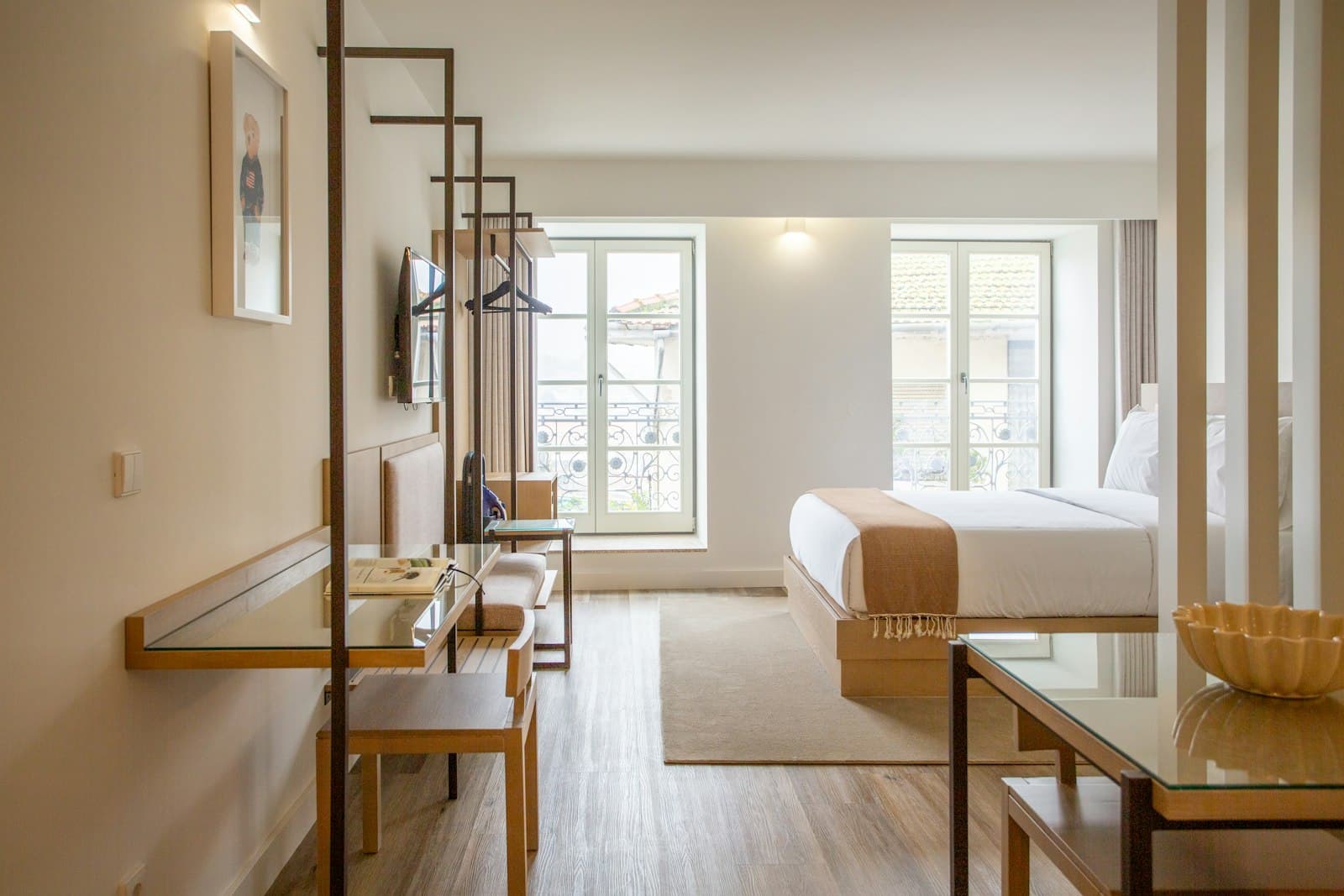
A bed and breakfast getting 72 percent of its bookings via Booking.com gives away hundreds of euros in commission every month for visibility it could partly organize itself. Becoming less dependent on Booking doesn't mean canceling. It means building a second route where no platform stands between you and the guest.
The problem
Say you have 6 rooms and now run 72 percent of your bookings via Booking.com. That figure is no accident. Booking shows up at the top of Google, has a trusted name, and guests book there without thinking. For you it works too: the rooms fill up. The discomfort is in the monthly statement.
On that statement you see a commission line every month. With Booking it's for most Dutch accommodations between 15 and 18 percent, and with visibility programs like Preferred Partner or Genius it climbs to 20 percent or more. That's money you've earned with a full room, going to Amsterdam instead of to you.
The real problem isn't the commission itself. It's the dependence. If 72 percent of your revenue goes through one channel, that channel determines your margins, your terms and your visibility. If Booking changes its commission model or ranking rules tomorrow, you're stuck. You can't negotiate, because you have no alternative ready. That's a weak position, even if the relationship works fine now.
A guest who books via Booking is also not your guest. You don't get his real email, just a forwarding address from the platform. You can't simply reach out for a next visit, because Booking's terms forbid it. And the review he leaves lands on the platform instead of on your own Google profile, where it would attract new guests. Booking takes not just the commission, but the guest relationship.
An accommodation sitting at 18 percent direct bookings thus leaves two things on the table at once: margin now, and the guest relationship for later. Good news is you don't have to give up either to start addressing the problem. You don't have to ditch Booking to become less dependent. You just need to add something alongside it.
Calculation example
Numbers make it concrete. Take a bed and breakfast with 6 rooms, averaging 60 bookings per month, average booking value €120, and 72 percent of that via Booking at 18 percent commission.
| Item | Now (72 percent via Booking) | Goal (50 percent via Booking) |
|---|---|---|
| Bookings per month | 60 | 60 |
| Average booking value | €120 | €120 |
| Bookings via Booking | 43 | 30 |
| Commission per booking (18 percent) | €21.60 | €21.60 |
| Commission per month | €929 | €648 |
| Commission per year | €11,145 | €7,776 |
| Savings per year | €3,369 |
The shift from 72 to 50 percent sounds small. In euros it's over €3,300 per year that stays in your pocket. And that's a conservative goal. Drop to 40 percent and you're saving toward €5,000 per year. The booking engine you need costs about €30 to €50 per month, or €360 to €600 per year. Against savings of over €3,300 that investment pays back with the first few direct bookings, and after that everything is profit.
Don't count on a miracle in month one. The 13 bookings per month you want to shift (from 43 to 30 via Booking) won't all arrive at once on your own site. They trickle in as your site becomes more visible, your reviews grow and repeat guests book direct. The calculation example is the end picture after a year of work, not the standing after the first week.
To recalculate this with your own numbers, use the savings calculator. It shows what a shift from X to Y percent delivers at your nightly rate and occupancy. Background on the commission model is in Booking.com commission calculated per night.
Step-by-step plan
Becoming less dependent happens in phases. Don't try to do everything at once. The order below builds the second route without jeopardizing your Booking volume.
Phase 1: make sure guests can book direct at all (week 1 to 4)
Most small accommodations have a website, but no working booking button. Guests have to call, email, or click through to Booking anyway. That's the first leak you close. You need a booking engine: the system that shows live availability, lets you pick a date and handles payment on your own site.
For 4 to 8 rooms a simple booking engine is sufficient. Which fits your situation is in what a booking engine is and which fits your accommodation and setting up your own reservation system. Without this step the rest makes no sense: you can steer guests to your site, but if they can't check out there, they go back to Booking.
Phase 2: make direct booking more appealing than via Booking (week 4 to 8)
Since European regulations around 2024, you can ask for a sharper price on your own site than on Booking. The parity clause that once forbade it is mostly off the table. Use that space. Offer at least a few euros off direct, or an advantage worth money: free cancellation, a later checkout, a drink at arrival.
Communicate that difference on your site with a clear promise. How to phrase it without sounding cheap is in explaining a best price guarantee on your site and why your own site can be cheaper than the OTA. An OTA, in short, is a booking platform like Booking.com or Expedia.
Phase 3: make sure guests find you without Booking (week 8 to 16)
Booking delivers its visibility through Google. If someone searches "B&B Friesland", they see Booking.com and Bedandbreakfast.nl first, and your own site is somewhere down or not in view at all. You can take back some of that visibility yourself with a good Google profile and fresh reviews.
So actively collect reviews on your own Google page instead of just on Booking. Ask every departing guest for a Google review, not on the platform. How to do that systematically without bothering guests is in collecting reviews on Google. An accommodation with 60 recent Google reviews shows higher in local results and pulls direct traffic that otherwise landed at Booking. That traffic comes to your own site, where the booking button from phase 1 is ready. So the phases lock together: visibility without a booking button delivers nothing, and a booking button without visibility also doesn't.
Phase 4: turn one-time guests into repeat guests (ongoing)
The cheapest direct booking is a guest who's already stayed with you. They know the way, they trust you, and they don't need a platform to find you again. So collect email addresses from everyone who books direct and send a neat message a few times per year: a seasonal offer, a tip for a bike route nearby, a reminder that peak season is filling up. How to set that up without becoming spam is in setting up a hotel newsletter.
A repeat guest who books direct costs you zero commission. Over a few seasons this is the phase that delivers the most, precisely because it accumulates. Every guest you properly capture this year is a potential direct booking for the years to come. Start early, even if a list of 20 addresses still feels small.
What you can do this week
Log into your Booking extranet and find the commission overview for the past 12 months. Add up the total. That number is your yearly motivation. Then calculate in the savings calculator what a shift to 50 percent delivers. Two tasks, half an hour together.
Common mistakes
Canceling Booking all at once. This is the biggest mistake. Booking delivers visibility to guests who don't know you. Cancel before your own route is running and you'll drop in occupancy and panic. Build the second route first, then gradually lower your dependence. Canceling is an endpoint, not a starting point.
Asking the same price on your own site. If booking direct costs exactly the same as via Booking, the guest picks the platform: more reviews, a familiar checkout flow, a guarantee program. Your direct rate has to give a real reason to deviate. A few euros or a concrete advantage is enough, but it can't be missing.
Waiting for the perfect system. Many owners put off the booking engine for months because they want the "best" one. A simple working module that goes live today delivers more than the ideal module that might appear in half a year. Start small and upgrade later when you have the volume.
Expecting it to happen fast. A habit shift, return emails and reviews build slowly. Plan on 3 to 6 months for the first measurable difference. Anyone concluding after 6 weeks that "it doesn't work" quits right when it's starting to run.
Not capturing the guest relationship. If a guest books direct and you don't ask for an email or newsletter permission, next time starts from scratch. The value of direct bookings isn't just in the commission saved now, but in the repeat booking later.
What you can do now
Becoming less dependent on Booking is not a one-evening project, but it's also not a years-long journey. It's a steady shift that starts with one working booking button and a price that makes direct booking worthwhile.
Start with the numbers. Calculate in the savings calculator what a shift from 72 to 50 percent delivers per year. That number determines how much hurry you have. Then read how the commission model works in Booking.com commission calculated per night, so you know what percentage you pay.
If the booking button is the missing link, then setting up your own reservation system is your first concrete step. If that's already running, look at why your own site can be cheaper than the OTA to make your direct price more appealing.
Build the route before you close the old one
The temptation is great to want to leave Booking right away out of anger over commission. Don't do it before your own booking route is demonstrably working and guests find you without Booking. First the second route, then lower your dependence.
Prefer not to figure out in what order this delivers the most for your accommodation? We'll look at that together in marketing for hotels and bed and breakfasts.
Frequently asked questions
Do I have to completely cancel Booking.com?
How long until I'm less dependent on Booking?
What does 10 percent more direct bookings deliver?
Can my direct price be lower than on Booking.com?
Do I need expensive software to receive direct bookings?
What if I'm afraid of losing bookings by scaling back Booking?
A concrete tip in your inbox each month
Practical marketing and automation tips for small-scale accommodations. No sales talk, unsubscribe anytime.
Your email address is only used for these emails and never shared. You can unsubscribe from any email. See the privacy policy.